Upon Discovering That Hollywood Really Is Making a Movie Based On the Battleship Board Game

December 6th, 2011 by alec

[SCENE. Office, Big Hollywood Studio. Producer behind desk. Director stands in front.]

PRODUCER: What board games haven’t been made into a movie franchise yet?

DIRECTOR: Pretty much all of them have, I think.

P (gently prodding): All of them? Come on, think! What’s left?

D: Well…. there’s… there’s…. no I can’t say it…. it’s too stupid…

P (more loudly): Spit it out man! This is Hollywood! Nothing is too stupid here!

D: Well…. um…  there’s (gulps) … Battleship?

P: Battleship! Genius! That’s it. Now, how to make it zing? What’s that thing we always do?

D: Add aliens?

P: Someone give this guy 10 million dollars! Cause we’ve got a hit!

Great Artists Steal…

September 3rd, 2011 by alec

…but what about Tom Petty?

You be the judge. Here’s a song called “Here Comes the Night” by the Irish band Them (featuring Van Morrison, and much more well-known for their B-side “Gloria”) from 1964 (wikipedia page).

Here Comes the Night” by Them

And here’s the well-known Tom Petty song, in case you’ve forgotten.

Here Comes My Girl” by Tom Petty

Some might say that karma got revenge on Tom Petty, in the form of the Red Hot Chili Peppers’ take on his “Last Dance for Mary-jane”, the contemptibly unlistenable “Danni California.”


Create, Consume, Communicate, or Practice?

September 2nd, 2011 by alec

After hearing a well-known food writer talk about how he forces himself to write first thing with coffee every morning, I’ve been thinking about how much time a creative person should allocate to the following areas:

  • Create: For a writer, forcing yourself to put pen to paper. A musician: actively composing. An artist: paint must be on the brush—whether or not you are feeling the Muse.
  • Consume: Reading, listening, participating in the arts passively. It’s hard to think of an interesting musician without finding a person who listened to older records obsessively. Same goes for all other artists, with few exceptions, and most of the exceptions are liars.
  • Communicate: Talking to others about/within/around the topic; sharing stories; formal and informal meetings. Online communication is certainly a big part of it (What I am doing now with this blog entry in fact). Writers have retreats. Musicians have jam sessions.
  • Practice (This was gong to be “Learn” but “CCCP” was a better acronym): Includes all forms of active study, from practicing your instrument, to attending lectures, to reading instructional materials. It can even be watching TV or YouTube if it teaches you something.

It seems there must be some kind of balance, and I suppose it depends somewhat on the kind of work you do. Communication seems less important in most of the visual arts, and Practice is probably hard to do if you’re a writer unless you’re actually writing, and that puts you in the Create area.

I am curious to hear from anyone who’s developed an approach to this. As a self-taught musician, and a wanna-be writer, I used to believe that everything was in the Create zone. I felt guilty, even angry at myself when I was doing anything but writing. It’s taken me a long time to realize how important the other 3 areas outside Creation are important. I think I have got the Consume area down — now I could definitely could use more Practice in my life.

One thing I have noticed is that you need to understand where you are on the curve of learning vs the plateaus of inspiration. If you are finding it hard to be inspired, there’s a good chance that your energies would be better spent learning. Study someone whose work you really respect. Immerse yourself in it. Don’t worry about being a copycat—you’ll probably only retain 5% of what you learned anyway, and you’ll synthesize whatever you retained into your toolbox. The next time you try to create, you’ll have a new palette to choose from. That’s my take anyway, and I’d love to hear yours.

A brief history of Chef Menteur, part 2.

July 23rd, 2011 by alec

Here is part 1 of this post. 

I hadn’t played a live show in what seemed like ages, and the most technology I had ever used onstage was using a distortion pedal AND a delay pedal on my guitar. Now I was leaving the guitar behind and bringing a mess of pedals for three keyboards (Farfisa organ, K2000 synth/sampler, 1980’s Yamaha toy synth), going through a mixer. Fortunately it was “just a house show” at our friend Chris Crowley’s FlophouseÂź and there was minimal external pressure… but having come from a indie rock background I honestly didn’t know if we could pull this electronic thing off live.

Countless hours were spent loading samples and patches into the Kurzweil K2000. I had Mellotrons and Moog samples as well as keymapped snippets of pieces of Art Bell’s AM radio show “Coast to Coast” where he’s talking about aliens and the Quickening.

The Quickening by Chef Menteur

People weren’t really doing laptop live shows quite yet—at least not in New Orleans—but my work Powerbook G3 was used with a microphone and a borrowed projector to make psychedelic improvisations based algorithmically on the music, using a visualizer named MacCthuga. (We later moved on to a more advanced visualizer called G-Force, later integrated into iTunes) — this was before visualizers were commonly built into iTunes and WinAmp, so the idea that the projections could reflect the waveforms of the sound we were playing was quite revolutionary at the time.

The visualizers we used could be pre-scripted as well as “played” live to a degree, so that you could set it up to have a better chance of showing the kinds of patterns you wanted to see, and could use keyboard shortcuts to advance color palettes or animations to the next one in the list. I spent a lot of time practicing this, but in the end it was too difficult to pay any attention to the video and still make a half-decent effort at performing, so although we did get some help at shows from a couple of friends, essentially it ended up on autopilot…. but still interpolating from the actual music being played through the microphone, which was the main point. I wanted to have a video member of the band that was of equal import to any of the musicians—especially (a few years later) after seeing Stars of the Lid perform at the Mermaid Lounge, who not only did that but did it with vintage film equipment.

Our first show was a success I was told, although it was a total blur for me. Our next couple of shows we tested in real live local rock clubs: the Circle Bar and the Mermaid Lounge.

Another song that we played for the first few shows was based on a Chinese pop vocal sample from my friend Mack that we had improvised over, put to a club beat, recorded to 4-track, edited and looped:

Chun-Li by Chef Menteur

Before moving on to part 3, I realized I’d forgotten another gem from our pre-live days that should probably be in part one. Probably the most acid/house of all our tracks (thanks to the 303s) it nonetheless is really rooted more in dub:

Terra Incognita by Chef Menteur 

Stay tuned for part 3. Meanwhile check out the tracks above to see what Chef Menteur started out sounding like and how far we’ve come— and please, please consider supporting our Kickstarter project!


Chef Menteur new videos, kickstarter, shows, etc!

July 6th, 2011 by alec

A lot has been going on in Chef Menteur world, as we try to get our album made.

Two new videos this summer (so far) featuring songs from the album, and we just announced another show.

http://chefmenteur.org/blog/

(I’m not gonna duplicate too much info across blogs, you can follow what’s going on over there.)

BUT…. Please support our Kickstarter project!

the Aural Dustbin

June 29th, 2011 by alec

I hope my friend Aubrey won’t mind me outing him here. He and I share many of the same tastes in both musical genres and acts that are out of fashion more often than not; and it’s rare to meet someone whose love for this music not only goes beyond a worry about what’s cool or hip (and not just stuff that’s ironically hip to love, like ABBA, or Yacht Rock) but is based on the music that truly moves or inspires you, even if it gets you laughed out of the room when you admit your secret shame.

He and his partner Shae run Citizen Objects, makers of fine quality art and music, and their under-appreciated record blog is a love-letter to music lost-in-the-stacks.

Check it out at the Aural Dustbin.

OM.

A brief history of Chef Menteur, part 1.

May 28th, 2011 by alec

I’ve been involved with a lot of different musical projects, as songwriter, collaborator, hired gun, organist, guitar player, engineer/producer, and so on, but for the past decade, my main musical project has consistently been a band called Chef Menteur.

Chef Menteur started at a time when I’d tired of indie rock band clichĂ©s, and wanted to do something different: focus on experimenting and improvising instead of writing the perfect 4 minute indie/pop/folk/country tune. Having been spent some concentrated time in London’s electronic music scene, I had never been able to get that out of my brain, and technology was finally allowing those of us who couldn’t afford the vintage gear prices to do rudimentary sampling and sequencing for much less.

Listen to “Shotgun”.

At Rue de la Course, a coffehouse on Magazine Street in New Orleans, I saw an ad that mentioned My Bloody Valentine, John Coletrane, Sea and Cake, and John Zorn. And so, Chef Menteur started out with drum machines, keyboards, synthesizers… sounding like some weird mutation of Stereolab, the Chemical Brothers, Bruce Haack and weird Ninja Tune b-sides.. with fuzzed out guitars/bass that could be from Sonic Youth’s Sister.

Listen to “Chef Menteur Hwy”.

A four-track Tascam tape recorder was used to capture live sounds and Pro Tools Free was used to edit and mix. The plugins could take 4 minutes to render 10 seconds of audio and the Mac 8500 we were using would often crash, forcing a complete reboot. Each song took ages!

Listen to “An American Favorite“.

We put some tunes up on mp3.com (this is before myspace) and claimed we were big in Japan. We started getting some plays on WTUL and well-loved and respected DJ Chris Crowley offered us a show at the the Flophouse, which was kind of a communal living/party space.

Listen to “Betty B Free”.

We said yes, but were terrified: this changed everything! How could we play live sounds that were so studio-based?

Continue with part 2… Meanwhile check out the tracks above to see what Chef Menteur started out sounding like and how far we’ve come— and please, please consider supporting our Kickstarter project!


Jazz Fest ticket prices vs. inflation

May 9th, 2011 by alec

Native New Orleanians, long-time Jazz Fest goers, and others like myself who’ve been here awhile remember when ticket prices were well under $20. Now they’re headed rapidly upward — currently at $60.

I just wanted to dispel any doubt that inflation is the cause, so I made a chart in Excel with ticket data points I collected from this Offbeat magazine article that I found via the blog liprap’s lament, and this piece on NOLA.com.

I used this Inflation Calculator to adjust prices for inflation to 2010 prices, and since it’s now 2011 adjusted annual inflation (1.63%) backwards for this year’s prices to 2010 as well.

Here’s the chart. As you can see, the steep increase of prices occurs over the last decade and correcting for inflation barely affects it at all.

Jazz Fest ticket prices over the years (click for full version).

UPDATED: Thanks to Will T. for adding the Gregorian year values.


Arcade Sine Wave: Art Installation

March 18th, 2011 by alec

A nifty art piece by David Fodel that uses an old arcade game console and elements of my Max/MSP project Sinewave Workshop to produce a unique installation. Very cool to say the least; check it out:

See Hear Now – Interactive Installation at Pirate Gallery from david fodel on Vimeo.

Psychic Summit iPhone app

December 21st, 2010 by alec

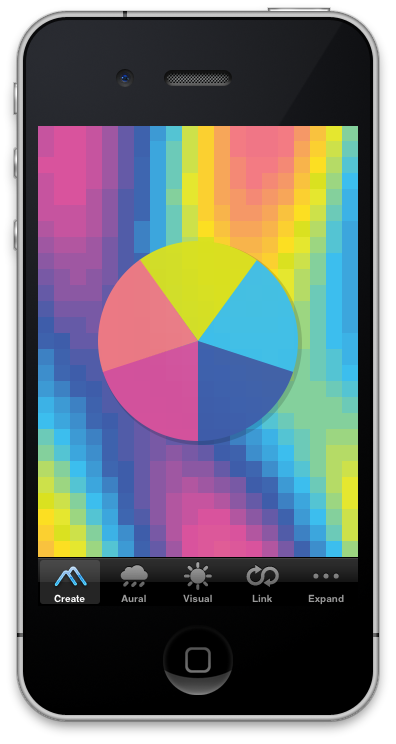
Psychic Summit Aquarium 2 iPhone appMy day job for the past year or so has been writing software for iOS. Not nearly as often as I’d like, but occasionally my interest in making music intersects with my work, and in this particular case I don’t think it’s ever intersected better. (The only time making music for work even came close to being this fun was perhaps when I made sound effects for a CD-ROM game in the mid-90’s, or made music loops for kids’ games in the early 2000’s).

For this app, however, I got to be an active part in the design process from the drawing board to the implementation. My interest in ambient music, generative systems, pseduorandom patterns, etc, all played into both the visual and aural aspects of the Aquarium 2 app. We make no secret of being inspired by devices like the Buddha Machine, apps like Brian Eno and Peter Chivers’ Bloom, or even those 1970’s new age ambient record series called Environments that you could pick up for 99 cents in bargain bins.

What resulted I think is a great app for constructing ideal ambient soundscapes to match your taste and mood. Each color wheel is a set of samples that you swap out with the next one by swiping across the screen; the background plasma colors change as well. You call up samples by pressing a colored wedge; the sample fades in after your touch. Touch it again and it gently fades out. The samples are mellow synthesizer loops constructed by ambient soundsmith Morgan Kuhli, or field recordings of natural sounds of the forest and ocean that you can blend. Whether you are looking for some soothing sounds for baby (c.f., Raymond Scott), something to read, meditate, or fall asleep to,  you can probably build a sound with this app that will work for you.

Read about it more at the Juggleware Developer’s Blog.

Or, check out the app on the App Store.